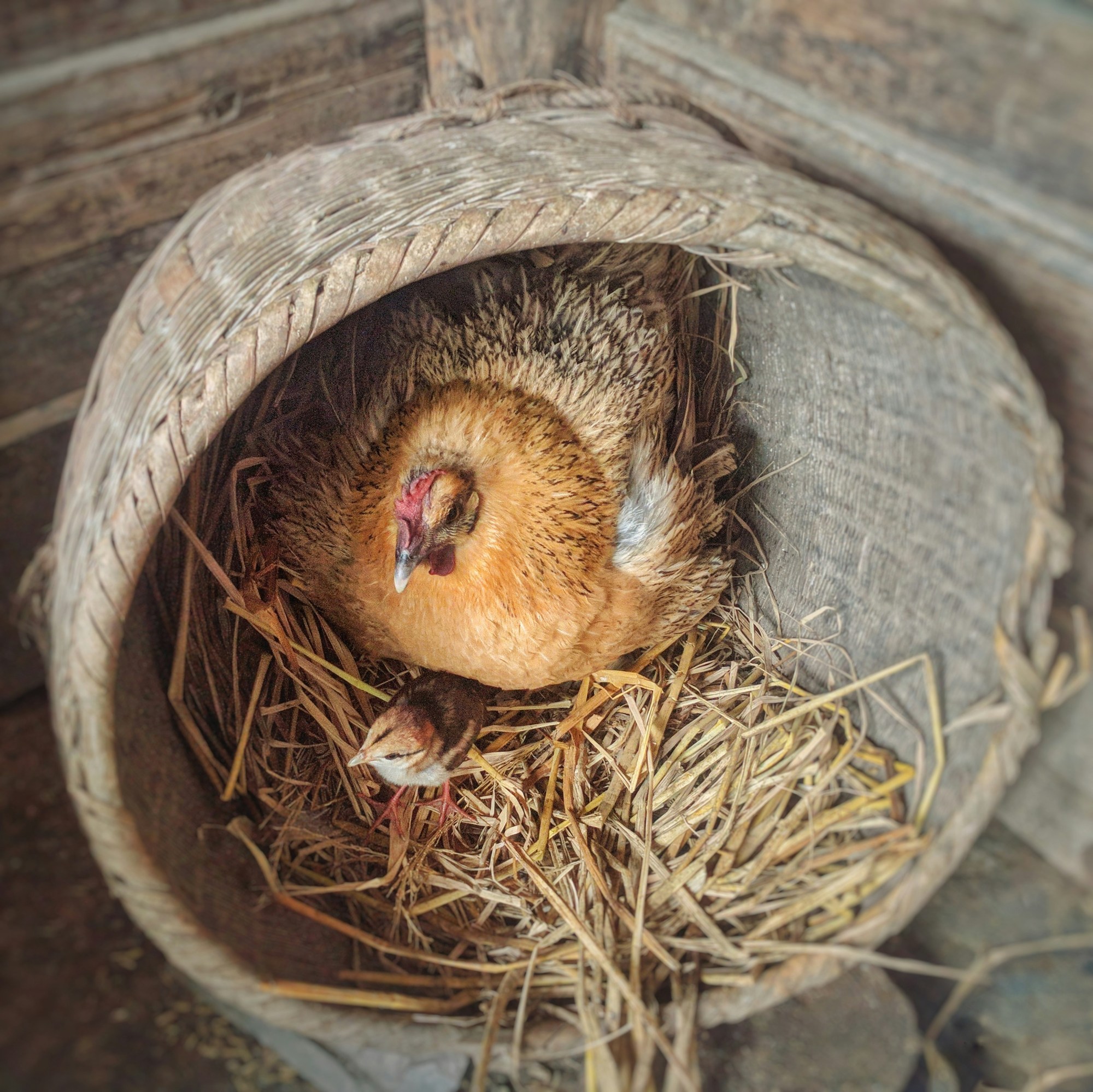
Trudy dreamed that she found three red hens nested beneath the camellia bush that grew outside her kitchen window. They were serene little birds, chuckling quietly together in the gray light of dawn, but Trudy immediately worried about them. Where had they come from? How could she care for them? Would they be safe back here between the fence and the koi pond?
When she awoke, the dream drifted away, as dreams tend to do. Trudy was concerned with the rituals of morning—the coffee, the oatmeal, frozen blueberries thawing in the microwave. Then she heard a bird chirping down the chimney, a phoebe most likely, and the dream came sailing back like a runner who races round the corner and down the street.
Standing over the gas stove with a wooden spatula in her hand, watching the oatmeal simmer, she heard cats howling, dogs barking, the hissing air brakes of the recycling truck approaching. Who has time for a dream, if it was a dream, a dream of chickens in the yard. She turned off the stove, put on her sweater, and stepped outside, determined to check. But the space beneath the camellia bush was filled with nothing but dried leaves and tired blossoms. A mosaic of wrinkled petals, pink and white.
She’d had a plan years ago to move with Charlie out somewhere—she wasn’t even sure where—someplace rural where the lots were bigger, and city ordinances against chickens and sheep wouldn’t apply. They talked about alpacas and sunflowers. It was a pipe dream invented over a dinner of pasta and wine, with a few gummies thrown in for dessert. They talked about it for years, but it would have been a lot of work, especially since Charlie was already a lot of work. He’d been fun, but it was never meant to last.
She went back inside and ate breakfast.
Later at school, she led her first graders through a unit on dinosaurs. She told them some were carnivores, some were herbivores, some were omnivores—exotic but fun vocabulary for their tiny mouths. She showed them maps of the world to contemplate, told them of weather, habitat, ecology. Finally she gave them crayons and pictures to color quietly. She watched as most of the kids chose green and gray, maybe a little blue—reptilian colors—for the dinos. She said nothing, but hadn’t she read now that scientists say these creatures were often covered in feathers? They were the progenitors of today’s avian population, were’t they? Perhaps they were iridescent, florescent, nearly psychedelic. She didn’t mention these words to the kids; they weren’t on the vocabulary list for today. But maybe it was true, maybe a few of these dinosaurs were hen-like, with reddish-brown feathers and chocolate-colored eggs. She hoped so.
Let them be the harbinger of spring. Let it all re-set. May it begin again.


